At a glance
- Typical cause, gas
- Pilot, thermocouple, gas valve
- Typical cause, electric
- Element, thermostat, reset
- Vegas-specific
- Sediment from hard water
- Replace when
- Tank leaking, or over 10 years
- Pricing
- Quoted by the plumber before work
What the symptom usually means
No hot water at all on a gas heater is most often the pilot or the thermocouple, the small sensor that tells the gas valve the pilot is lit. On an electric heater it is usually one of the two heating elements or the high-limit reset button that tripped. Lukewarm water that runs out fast points to a failed lower element, a broken dip tube, or a tank so full of sediment that the burner is heating rock instead of water.
A rumbling or popping sound when the burner runs is sediment. Las Vegas water carries a large amount of calcium and magnesium, and it settles at the bottom of the tank as scale. A tank that has never been flushed can hold several inches of it.
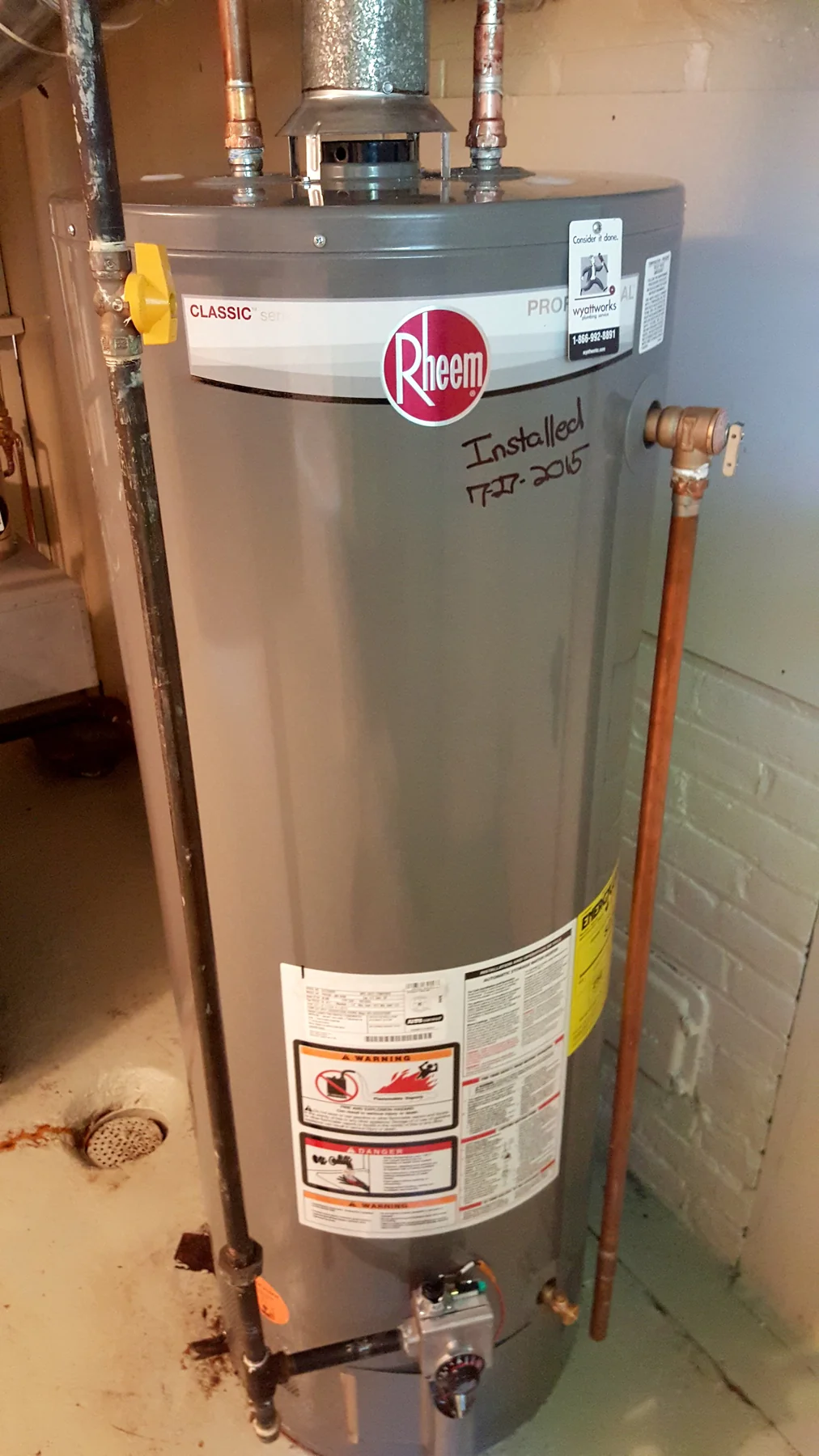
Water at the base of the tank is the symptom that matters most. If it is coming from a fitting, the drain valve, or the temperature and pressure relief valve, it is repairable. If the tank itself is weeping through the steel, the tank is finished and no repair holds.
What a repair visit looks like
The plumber checks the age (the serial number tells them), tests the gas valve or elements, checks the anode rod, and looks at the relief valve and the connections. Common repairs are a new thermocouple or igniter, one or two elements and thermostats, a new relief valve, a new drain valve, or a flush to clear sediment. Most of these are done in one visit with parts from the truck.
Ask the plumber to quote the repair and the replacement side by side. On a tank older than eight years, a repair that costs a third of a new heater is often money spent on something that fails again within the year.
Repair or replace: the honest rule
Under six years old with a fitting or part leaking: repair. Six to ten years old with a part failure and a dry tank: repair is reasonable, but ask about the anode. Over ten years old, or any age with the tank itself leaking: replace. Las Vegas tanks that have never been flushed should be treated as a year or two older than their serial number says.
The replacement page covers sizes, gas versus electric, and what Clark County requires on a new install.
Before the plumber arrives
Find the heater and note the brand and the serial number from the label. If water is on the floor, close the cold-water valve on top of the tank (turn clockwise) and, on a gas unit, turn the gas control to Off. Clear the area so the plumber can reach the tank, the valve, and the vent. If the heater is in the garage, make sure the garage can be opened.
Your questions
Why does my water heater fail so fast in Las Vegas?
Hard water. Scale builds up at the bottom of the tank, the burner works harder to heat through it, and the steel fatigues. Annual flushing and an anode rod check roughly double the usable life.
Can I relight the pilot myself?
On most gas heaters, yes, following the label on the gas control. If it lights and goes out again within a day, the thermocouple is failing and a plumber should replace it.
Is a leak at the top of the tank serious?
Usually not. Leaks at the top come from the inlet and outlet fittings or the relief valve, all of which are repairable. Leaks from the bottom of the tank body are not.
How long does a repair take?
Most single-part repairs are done in about an hour once the plumber is on site. A full flush on a badly scaled tank takes longer.